An openhearted intake within fifteen minutes with a board game
This board game reverses the roles: clients ask the questions themselves!
During the intake, clients take the lead and challenge their loved ones to take a closer look at their mother, father, child, or grandparent: how well do they really know them?
Playing activates people. It provides the current for conversation to flow. Family stories arise naturally, and with them, the right questions for a care provider to gather information about a new client more swiftly.
Crucial information
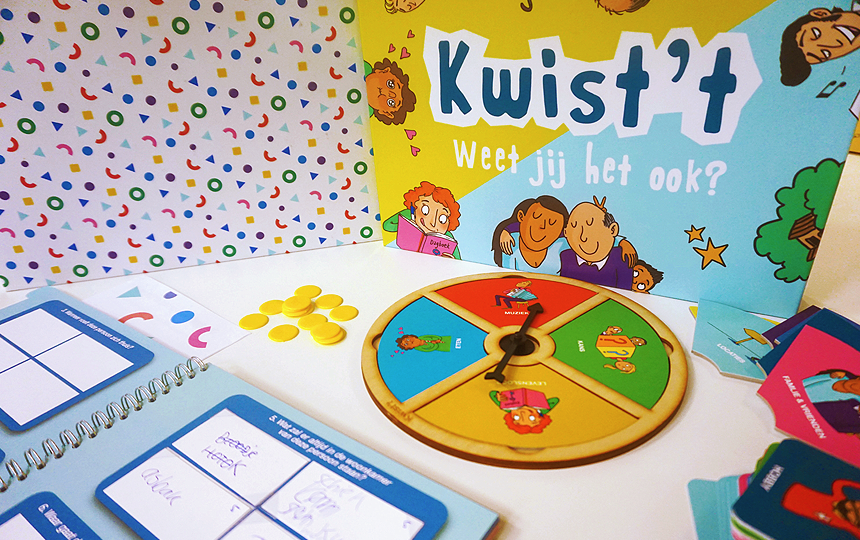
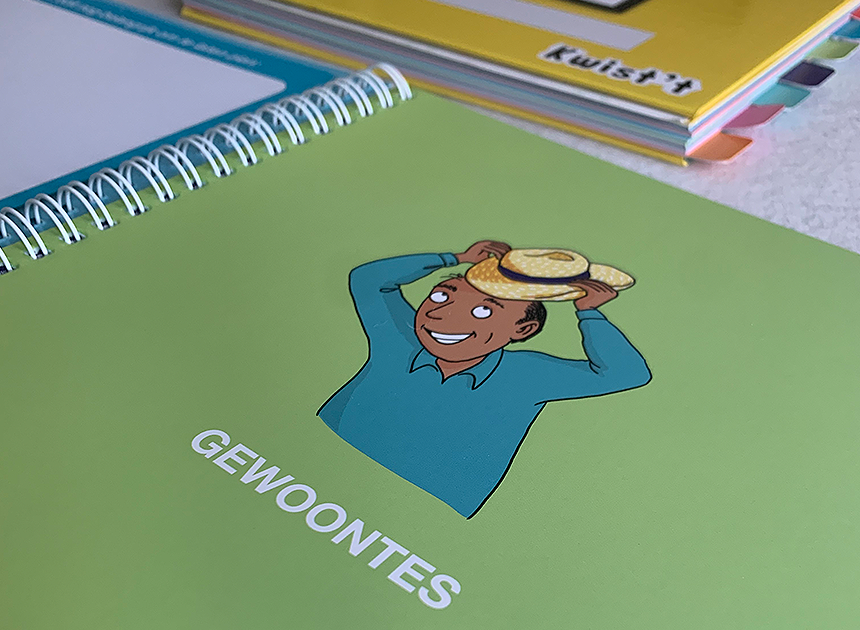
Kwist’t offers questions in various categories, such as regarding a person’s personality, social network, and background, but also what a client does and does not eat, what music calms them down, and which daily habits are of great importance.
The game elicits funny stories that contain crucial information.
The answers are recorded in a personal scrapbook. Precisely because it is physical, others, such as family, can also contribute.
That results in a complete picture of a new client.
How does a board game make an intake more openhearted?
Kwist’t places a client in the role of questioner, making them an active conversational partner, rather than the passively interrogated.
Answers are heard and discussed, not merely noted.
Being given a say in the process, the pace, and the conversational tone also creates a sense of safety.
And the lighthearted feel and humor of the game quickly break down existing barriers. Play disarms.
food
family

habits
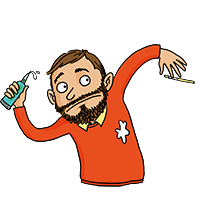
hobby
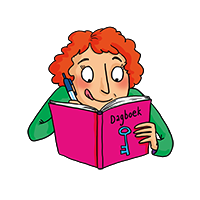
life course
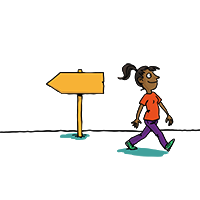
locations

media

music
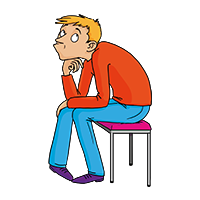
personality
Kwist’t in action
3-10
players
15-60
minutes
6+
years old
9
question categories
The steps to developing
an intake board game
Bringing together the team
The workgroup consists of 6-8 participants of the most important stakeholders.
This means the project team, the end users and, potentially, externals such as ethicists and healthcare professionals.
Game Ready Workshop
Together with the team of stakeholders, we
- define our goals and design criteria
- come up with ideas
- draft the first prototype
in a day-long creative workshop.
Development & testing
A prototype becomes a MVP, shaped by choices made with the whole team.
Development is an iterative process: we build, test and apply our learnings to the next round.
Implementation
The finished product is implemented and ready for use.
We provide training to ensure long-term use and enjoyment of the product.

More information


