Stimulating person-centered care with an escape room
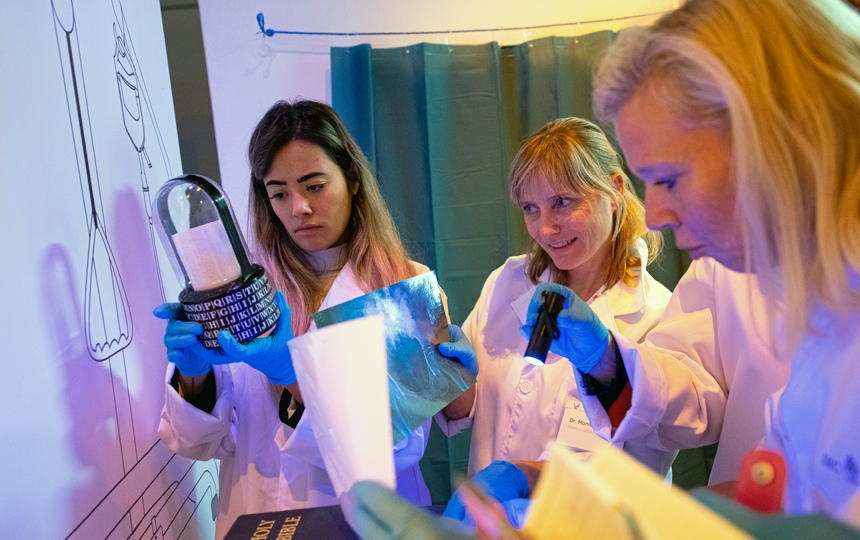
Escape rooms for healthcare are experiential, playful training sessions that encourage curiosity, observation, and empathy.
The escape rooms are designed around a fictional client story: a character with a complex care need that can only be resolved by truly getting to know the client.
Answers are hidden in the recreated nursing or hospital room. Observational skills and casting aside assumptions are rewarded here.
Promoting care technology
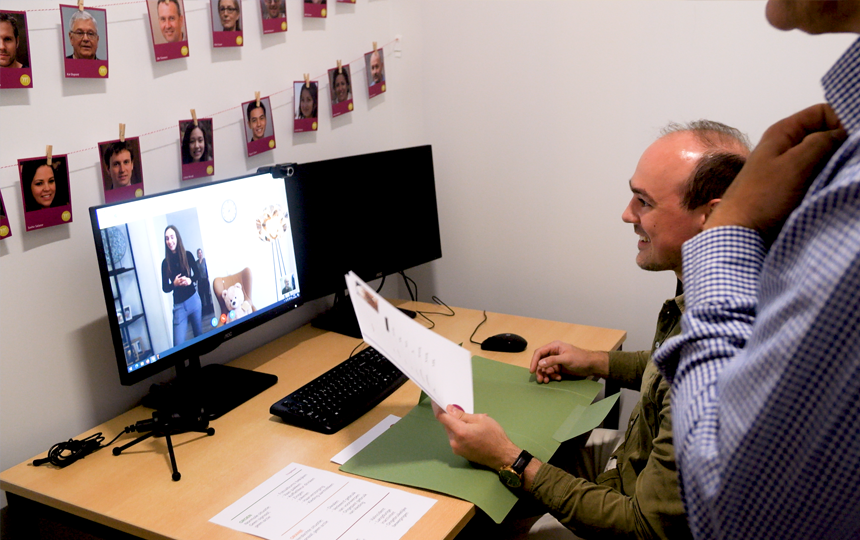
Several escape rooms have woven care technologies into their puzzles. Participants must make use of these in order to solve the escape room.
The playful escape room focuses on puzzles and a sympathetic client story, and introduces innovations such as care technology as a playful element, not a task.
That makes the escape room methodology an ideal way to reduce feelings of resistance or anxiety.
How do escape rooms train healthcare providers in person-centered care?
The escape room is a fictional client’s home, available for a full investigation from top to bottom.
The puzzles require an inquisitive eye, searching for meaning in elements that are usually inconspicuous. Small details are revealed to contain crucial information about a person.
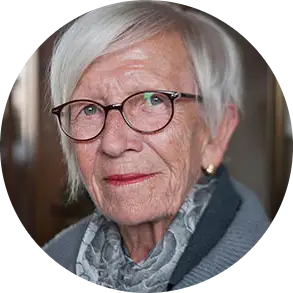
Participants can solve the escape room only by truly getting to know their client Ria, Harm or Romy.
During the training, those skills are translated into concrete actions for daily work.



Escape rooms for healthcare in action
Training
of healthcare staff in person-centered care
Education
module for appropriate care
Onboarding
of new people & volunteers
Inspiration
sessions with the team
The steps to developing
an escape room for healthcare
Bringing together the team
The workgroup consists of 6-8 participants of the most important stakeholders.
This means the project team, the end users and, potentially, externals such as ethicists and healthcare professionals.
Game Ready Workshop
Together with the team of stakeholders, we
- define our goals and design criteria
- come up with ideas
- draft the first prototype
in a day-long creative workshop.
Development & testing
A prototype becomes a MVP, shaped by choices made with the whole team.
Development is an iterative process: we build, test and apply our learnings to the next round.
Implementation
The finished product is implemented and ready for use.
We provide training to ensure long-term use and enjoyment of the product.

More information


